
Last updated November 15, 2026
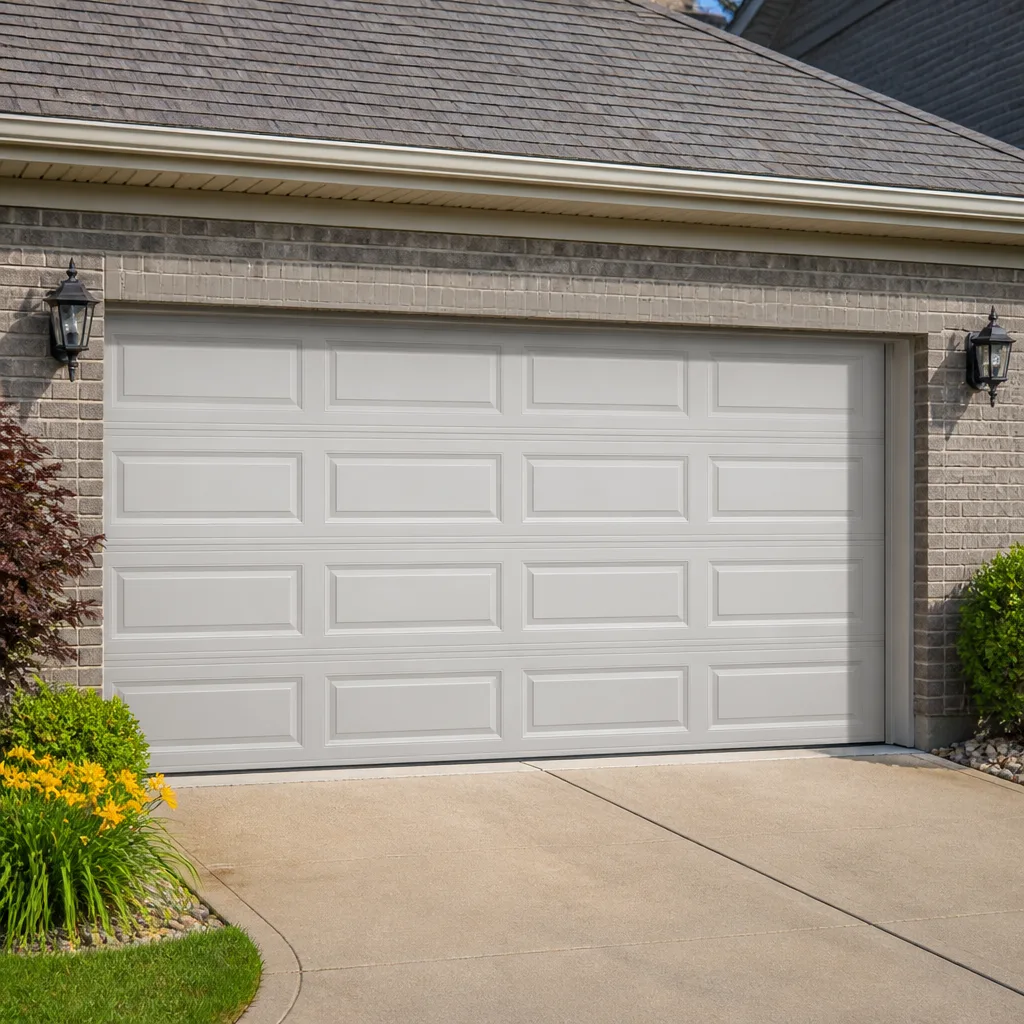 Raised-panel steel
 Carriage house
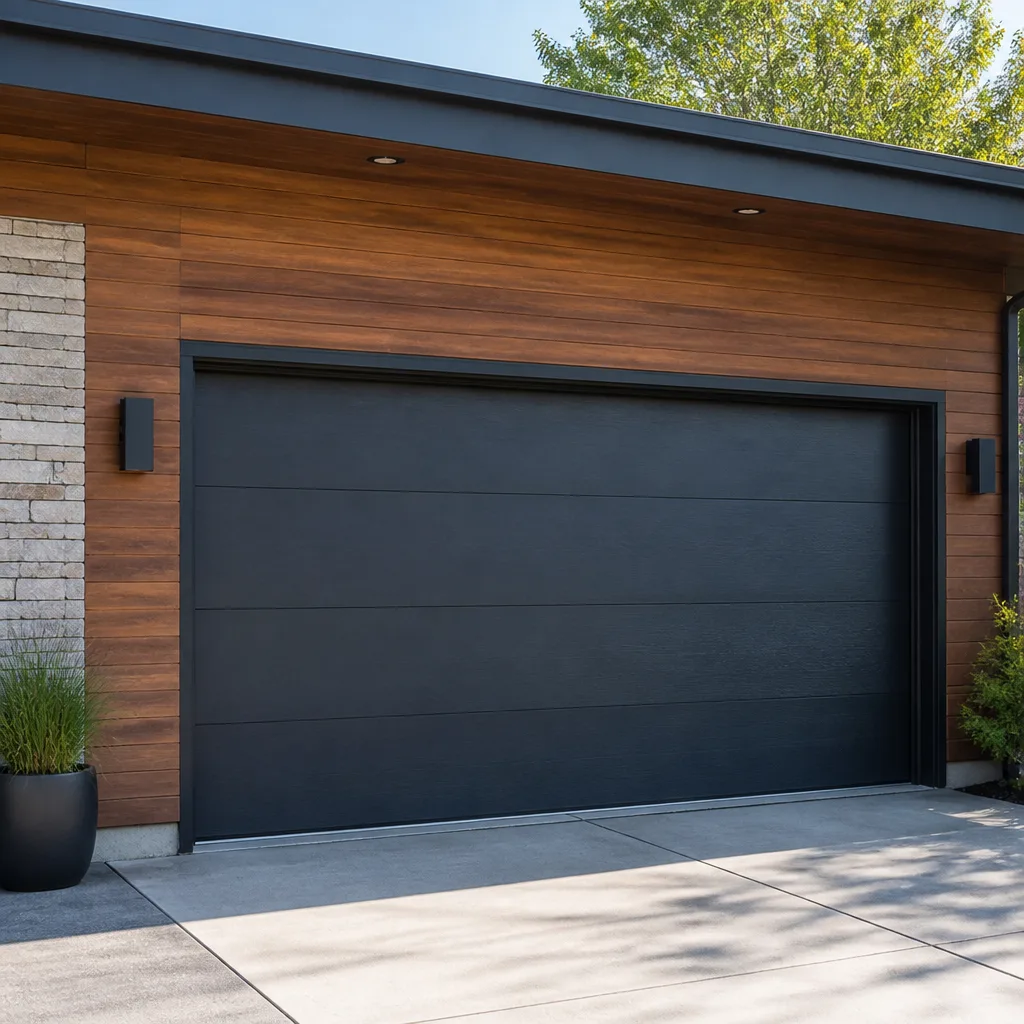 Modern flush
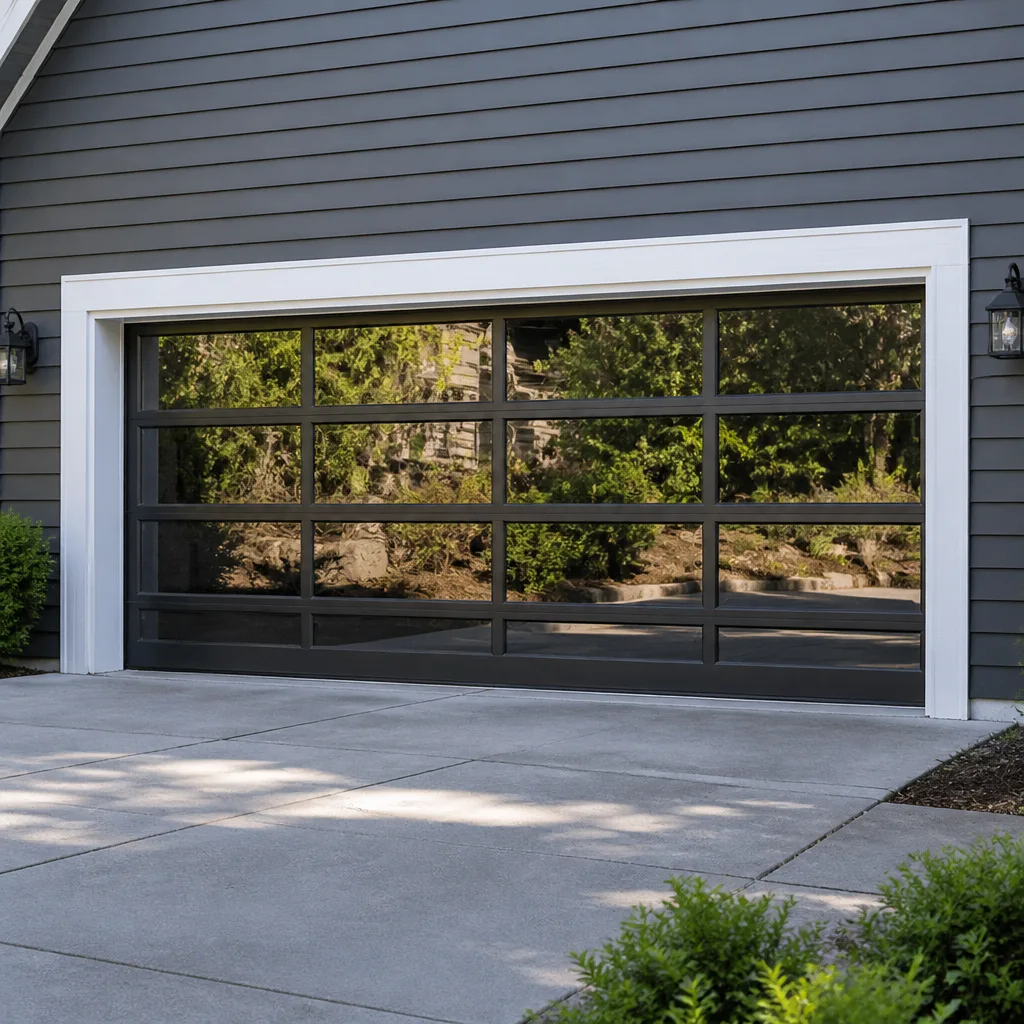 Full-view glass
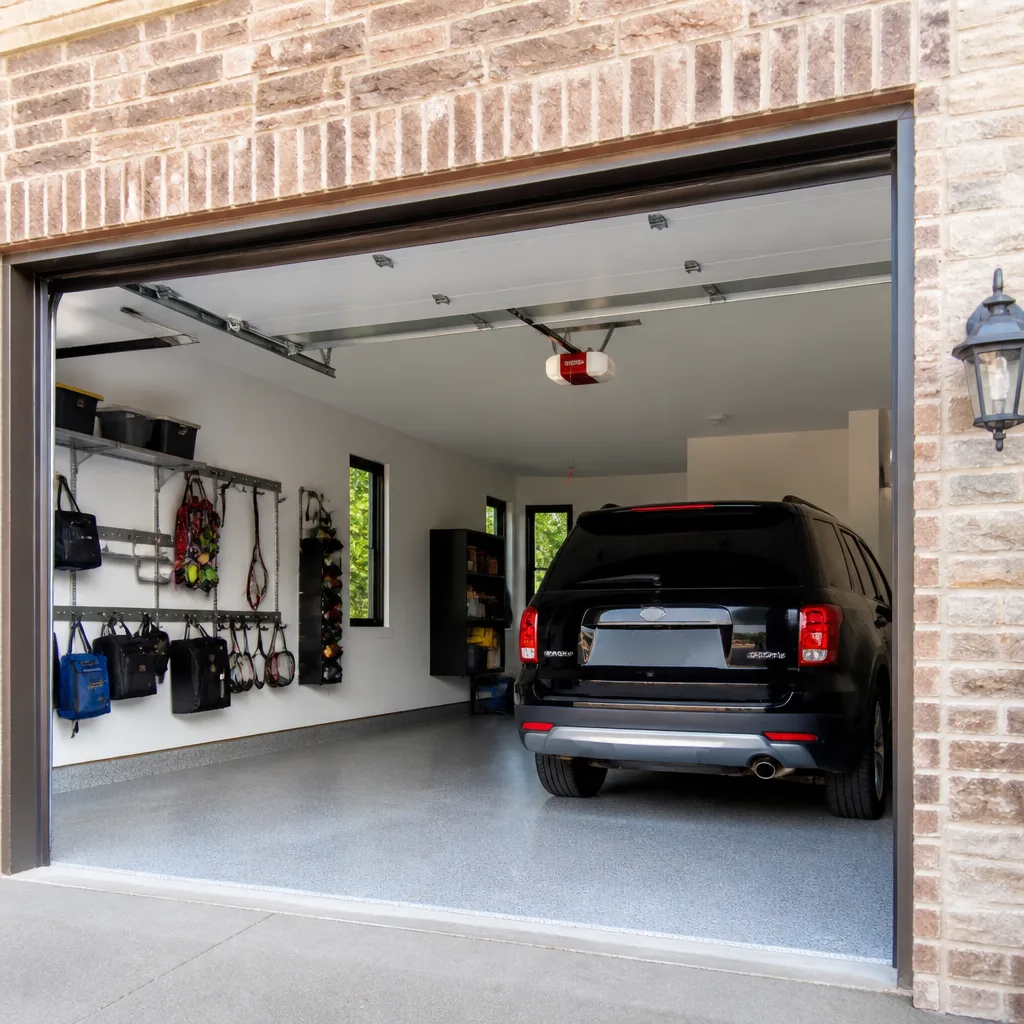 LiftMaster openers
 Chamberlain openers
Full 25-point door and opener safety check with every visit - springs, cables, rollers, tracks, and your LiftMaster or Chamberlain opener included
You get a price before we start. It does not change when the pro arrives.
Get your free estimateGarage Door Repair Troubleshooting in Edison: Common Problems and How to Fix Them
“It won’t open” is not a diagnosis. It’s a symptom report, and the same three words can describe a snapped torsion spring, a jumped cable, a stripped opener gear, a bound track, or a photo-eye that got nudged out of line. The failure looks identical from inside your car. The cause underneath is completely different, and so is the repair. Homeowners who misread the symptom often pay for a part that was never the problem while the real failure keeps grinding away. This guide is built for Edison homeowners who want to name the failure before they call anyone. We’ll walk through the three mechanical categories every garage door problem falls into, the sounds that separate them, which inspections are safe and which are hands-off, and exactly when to stop troubleshooting and bring in a technician.
Quick Answer
Most garage door failures in Edison fall into one of three categories: a spring failure, a track or cable problem, or an opener failure. You can usually tell them apart without tools by watching how the door moves and listening to what it does when you press the button. Anything involving a broken torsion spring or a slack cable is a hands-off call to a technician. Door balance, track alignment, and opener behavior you can investigate visually and safely before deciding what to do next.
Styles & brands we work with
- Raised-panel steel
- Carriage house
- Modern flush
- Full-view glass
- LiftMaster openers
- Chamberlain openers
Table of Contents
- The Three Mechanical Categories Every Failure Fits Into
- What Each Failure Sounds Like
- What You Can Safely Check vs. What Needs Hands-Off Treatment
- How Edison’s Temperature Swings Cause Seasonal Failures
- The Troubleshooting Decision Tree
- Opener Failure or Door Failure? How to Tell the Difference
- Brand Matters More Than You Think
- Common Mistakes to Avoid
The Three Mechanical Categories Every Failure Fits Into
Every garage door system is built from three layers. There’s the door structure itself, with its panels, springs, cables, drums, and tracks. There’s the drive system, which is the opener motor, rail, and carriage. And there’s the control layer, which includes the wall switch, remotes, safety sensors, and any smart hardware in the system. When something fails, it belongs to one of those categories, and narrowing it down first is the fastest path to the right fix.
Here’s how each category presents itself:
- Spring or balance failure: The door feels unusually heavy, only opens a few inches, or won’t stay up when you lift it by hand. You may hear a loud pop from the garage.
- Cable or track failure: The door is crooked, binds partway up, grinds along one side, or you can see a cable hanging slack or off its drum.
- Opener or control failure: The door itself is balanced and moves freely by hand, but the motor won’t drive it, the remotes don’t respond, or the door reverses immediately after starting.
Homeowners in Edison often assume every failure is an opener problem because the button stops working. But when the springs are broken, the opener is doing exactly what it’s designed to do: pulling on a door it can’t lift and then reversing. The opener is fine. The spring isn’t. That single distinction saves more unnecessary opener replacements than any other piece of troubleshooting.
What Each Failure Sounds Like
Your ears are a better diagnostic tool than most homeowners realize. Each category of failure produces a sound signature, and matching the sound to the mechanism usually tells you what’s wrong before you’ve even looked at the door.
- A loud pop, followed by silence: That’s almost always a torsion spring snapping. It’s one of the loudest sounds a residential garage makes, and after the pop the door usually won’t lift more than a few inches.
- Grinding or scraping as the door moves: Metal-on-metal contact. Usually a roller that’s seized in its hinge, a track that’s out of alignment, or a door panel rubbing where it shouldn’t.
- Humming with no movement: The motor is running but the door isn’t. That points to a stripped gear inside the opener, a broken carriage, or a door so heavy from a broken spring that the opener can’t move it.
- Clicking, then nothing: Electrical or control side. A dead wall switch, a bad circuit board, or a safety sensor interrupting the cycle.
- A bang from the opener rail, followed by a slack chain or belt: The drive mechanism has failed internally. The motor turns freely but nothing transfers to the door.
One note on the pop: don’t investigate it by lifting the door. A door with a broken spring can drop fast and hard. That’s the moment to stop and call, not to keep troubleshooting.
What You Can Safely Check vs. What Needs Hands-Off Treatment
Some inspections are safe and useful. Others put you in the path of stored mechanical energy that can injure you badly. Knowing the difference is the single most important safety skill this guide teaches.
Safe to check yourself:
- Whether the safety sensors at the bottom of the tracks have a lit LED on both sides and are aimed at each other.
- Whether anything (a broom, a recycling bin, a bicycle) is blocking the sensor beam.
- Whether the wall switch or a remote has a dead battery or a tripped breaker at the panel.
- Whether the track has visible dents, bends, or debris in the channel.
- Whether the door hangs crooked in the frame when closed.
Hands-off, call a technician:
- Anything involving a torsion spring on the header above the door. That spring stores enormous energy, and a broken one is dangerous even when it looks harmless.
- A cable that’s slack, off its drum, or visibly frayed. Cables run under tension and can snap back.
- A door that’s dropped out of one track or is hanging at an angle in the opening.
- Any situation where you’re unsure. A technician would rather diagnose a healthy system than treat a preventable injury.
Our technicians have up to 9 years of experience working with torsion and extension systems. We treat spring work with the caution it deserves, and we ask homeowners to do the same. That’s why we recommend a professional for anything on that second list, including the visual checks on the spring itself.
How Edison’s Temperature Swings Cause Seasonal Failures
Edison sits in central New Jersey, where winter temperatures regularly drop below freezing and summer afternoons climb into the nineties. A garage door’s metal components expand and contract with every swing, and the parts that carry the load take the most stress.
The pattern is fairly predictable:
- Winter failures cluster on springs and cables. Cold metal is more brittle, and the torsion spring has been cycling thousands of times in warmer months. A spring that’s near the end of its cycle count often fails on the first genuinely cold morning of the season.
- Summer failures cluster on openers and rollers. Heat loosens grease and the opener works harder against friction. Rollers that were already worn become noticeably noisier in July and August.
- Spring and fall bring track issues. The temperature swings in between are when the wood framing around the door shifts and the tracks drift slightly out of alignment.
If you notice that the door has become harder to lift or has started groaning at certain times of the year, seasonal stress is often the cause. An annual visual inspection by a technician in late fall catches the spring and cable wear before the winter cold finishes the job on its own terms. For more on what that visit covers, see our garage door repair page.
The Troubleshooting Decision Tree
Here’s the order we recommend to Edison homeowners who want to figure out what’s going on before they pick up the phone. Work through it top to bottom and stop at the first point where you hit a “call a technician” result.
- Look at the door in the closed position. Is it sitting evenly in the frame, or is one side visibly higher than the other? If it’s crooked, the door has a cable or track problem, and that’s a hands-off call. If it’s level, move to step two.
- Try the wall switch, then a remote. If one works and the other doesn’t, it’s a control problem, not a mechanical one. If neither works, move to step three.
- Listen for the motor. Press the button and pay attention. No sound at all means an electrical or control failure. A hum with no movement means the opener is trying to work but something is blocking it. Move to step four.
- Pull the manual release cord. Only if the door is closed and the spring hasn’t visibly failed. Lift the door slowly by hand. If it feels heavy, rises a few inches and stops, or won’t stay up, the spring is the problem. That’s a call. If it lifts easily and stays up, the springs are fine and the problem is the opener or a track issue.
- Check the sensors and the track. Look for a lit LED on both sensors, aim them if one is dark, clear any obstruction, and look for visible dents in the track. If the sensors are clear, the track is straight, and the door balanced in step four, move to step five.
- Call a technician. At this point, the remaining causes are internal to the opener or deeper in the hardware. That’s a diagnostic job, not a homeowner job, and it’s the point where troubleshooting stops saving money and starts risking more.
That decision tree handles roughly ninety percent of the calls we get from Edison homeowners. Edison Garage Door Service uses it as the starting point for every diagnostic visit, and it’s why we can usually name the problem before we’ve opened the door’s hardware.
Opener Failure or Door Failure? How to Tell the Difference
This is the single biggest source of unnecessary replacement. A homeowner’s opener won’t lift the door, so they assume the opener is dead. Nine times out of ten, the opener is doing its job exactly as designed and the door underneath it has become too heavy to lift.
Here’s the test. Press the button and watch the door. If it starts to rise a couple of inches and then reverses and stops, the opener is fine. It’s detecting more resistance than it’s rated to overcome, and it’s backing off to protect itself. That’s a door balance problem, almost always a spring or cable issue.
If the opener motor runs and the door doesn’t move at all, that’s more likely an internal opener failure: a stripped gear, a broken carriage, or a snapped belt or chain. If the opener doesn’t make any sound when you press the button, check the wall switch, the breaker, and the safety sensors first, then look at the circuit board.
For a full breakdown of the opener side specifically, including how modern smart-opener hardware behaves when it fails, see our garage door opener repair page. In our experience, distinguishing opener from door takes five minutes and prevents a repair bill you didn’t need.
Brand Matters More Than You Think
A generic technician can identify a broken spring on almost any door. But diagnosing a LiftMaster opener that’s failing intermittently, or confirming whether a Chamberlain unit has a bad logic board or a bad wall control, requires knowing how that specific brand is built. The symptoms that look identical across brands are often caused by completely different internal components.
We work on the eight major brands that show up in Edison garages: LiftMaster, Chamberlain, Genie, Clopay, Amarr, Wayne Dalton, Craftsman, and Raynor. When a homeowner calls with a Genie opener that’s cycling the door halfway and then reversing, we already know the troublemakers in that model line. When it’s a Raynor door that’s out of balance, we know how those doors are assembled and where the tension is stored.
That brand fluency changes the diagnostic conversation. A technician who only knows one or two brands will often recommend replacing a system because they don’t recognize the equipment in front of them. We take the opposite approach: the right fix, not the easiest upsell. If a Genie opener needs a gear and a limit switch, that’s the repair. If it needs replacing, we’ll tell you why and what a replacement with a brand we already know well would look like. The installation advice comes from technicians who’ve serviced the same brands in the field, not from a sales script.
The name Edison itself signals what we do: precision. Electrical and mechanical accuracy is what separates a repair that holds for years from a repair that fails six months later. That’s equally true for traditional hardware and for the smart-opener systems showing up in more Edison homes every year.
Common Mistakes to Avoid
- Assuming “won’t open” means “bad opener.” When an Edison homeowner replaces an opener that was fine, the real cause (usually a spring) stays broken, and the new opener struggles worse than the old one. Diagnose the door before you shop for hardware.
- Pulling the manual release when the door is open. If the door is up and the spring is broken, releasing the carriage drops the door under gravity. Always release with the door fully closed.
- Threading a broken spring yourself. Torsion and extension springs store energy that can injure or kill, and this is the repair where we always recommend a trained professional. No homeowner-installed spring is worth the risk.
- Greasing the tracks. Track grease traps grit, which slows the door and wears the rollers. Lubricant belongs on the springs, hinges, and rollers, not in the channel.
- Loosening the track bolts to “see if it helps.” Tracks are set square to the door for a reason. Once they’re off square, the door binds, the rollers unseat, and the fix becomes a full realignment.
- Ignoring the seasonal grinding. A door that groans only in January is telling you about spring or roller wear. Waiting for the failure means paying for a repair in worse conditions and possibly a panel.
- Mismatching spring wire gauge on a DIY replacement. Even if you found the right type of spring, the wire gauge and cycle count need to match the door’s weight and how often you use it. A wrong-gauge spring fails early and can damage the door frame.
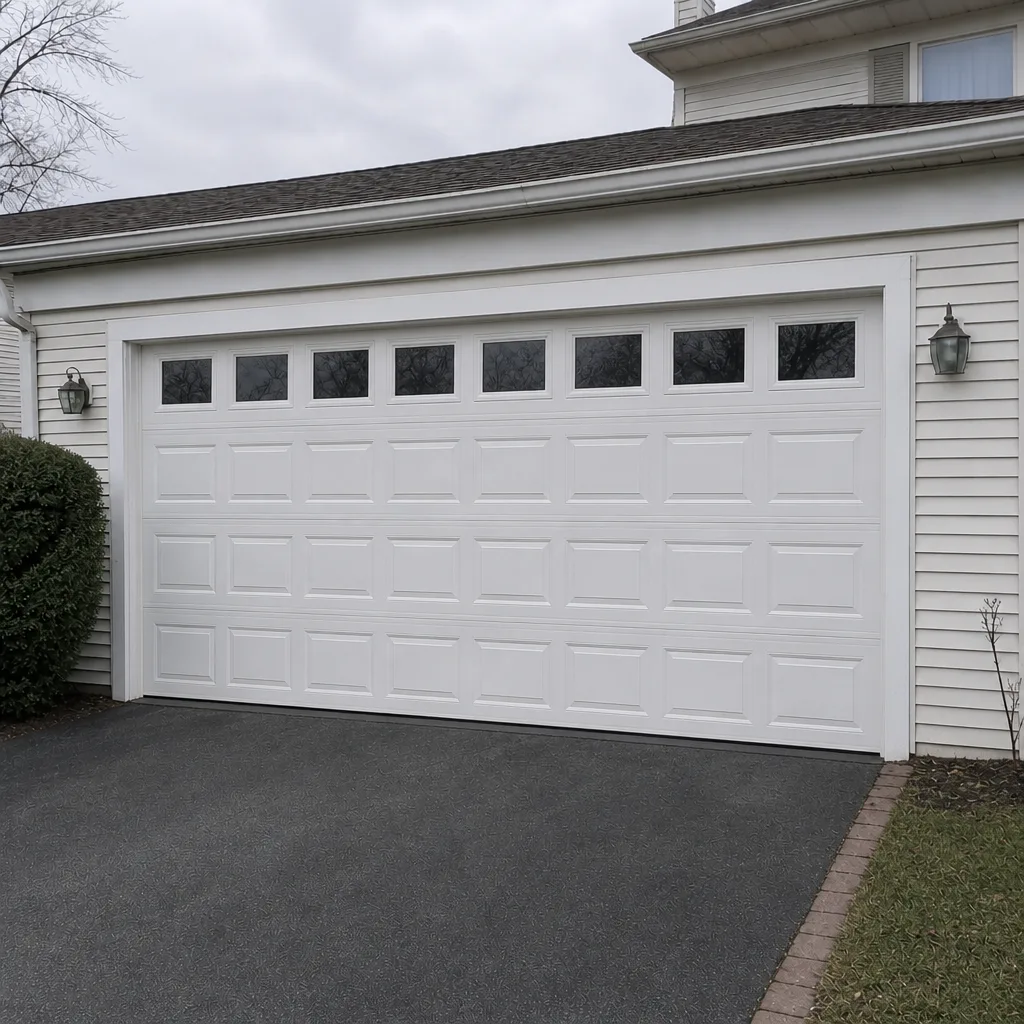
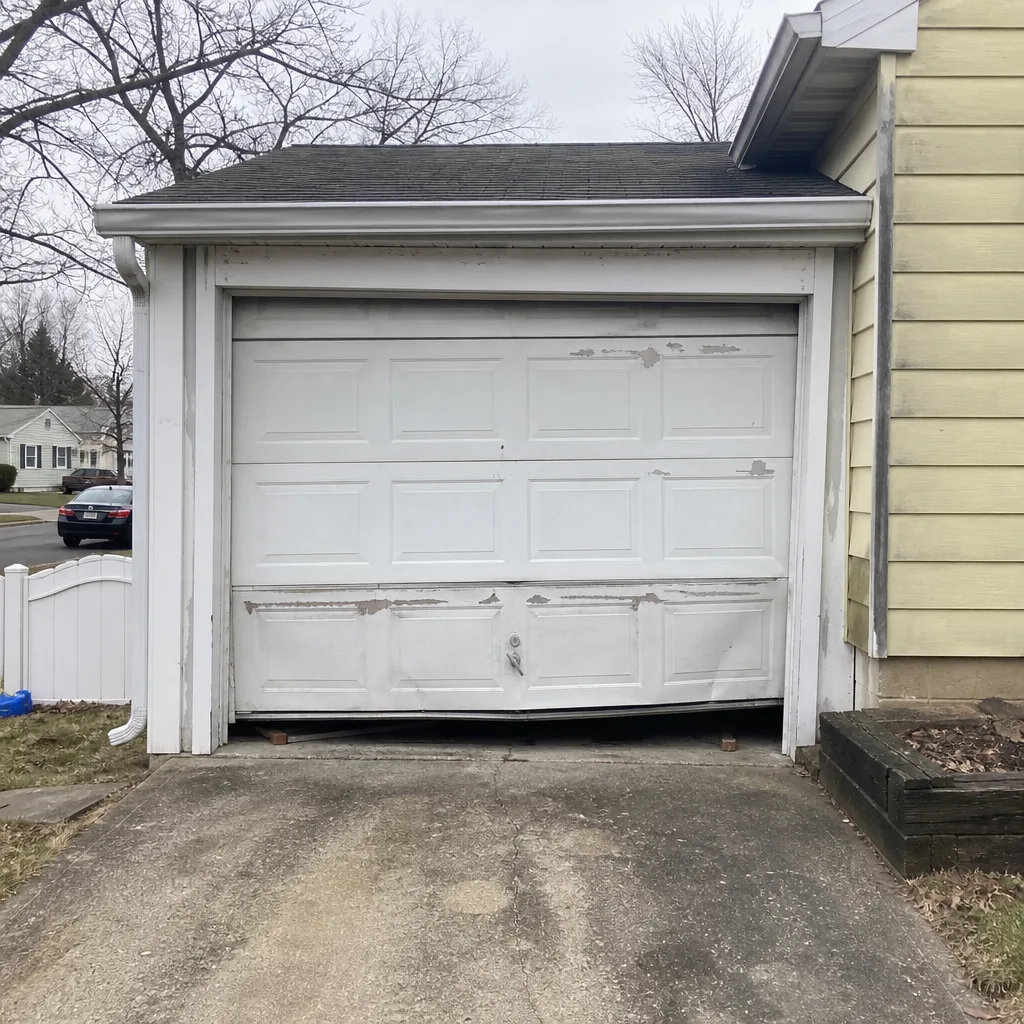
See the difference
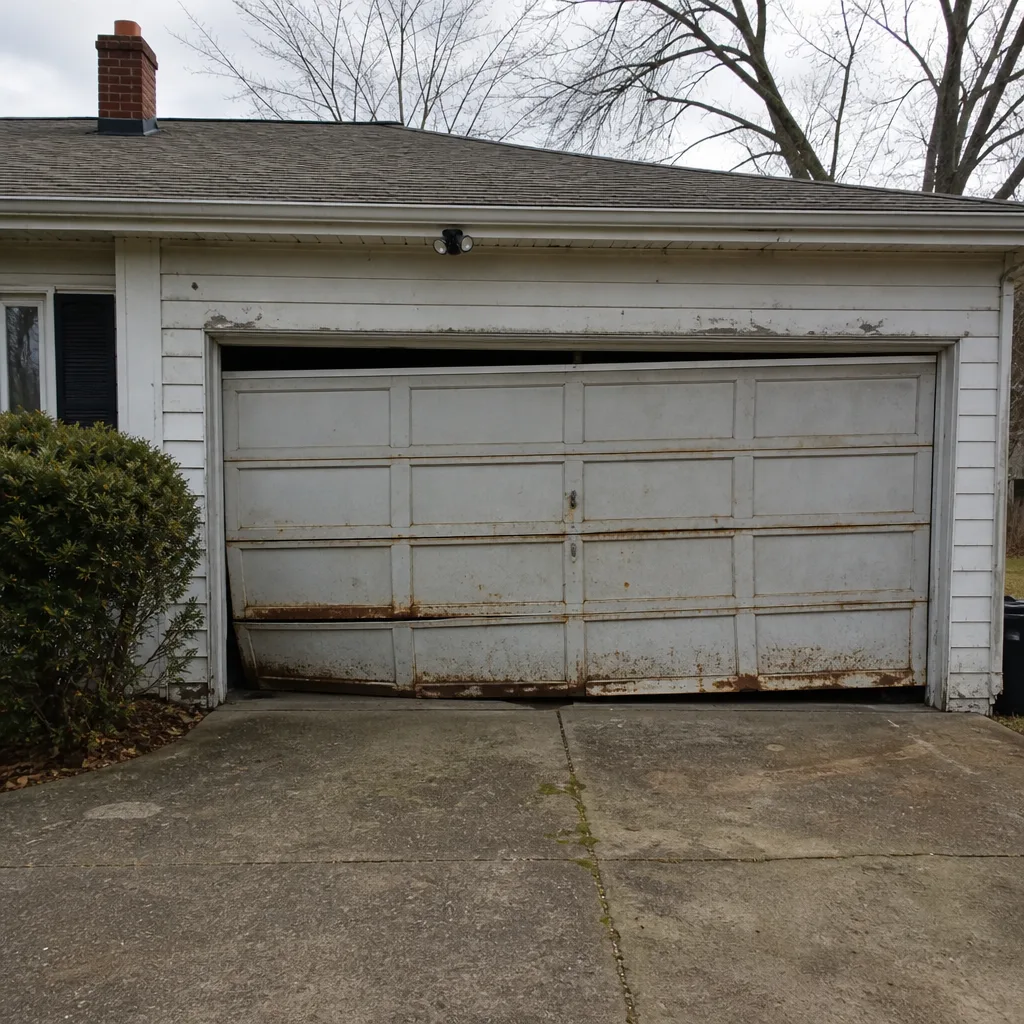 Before
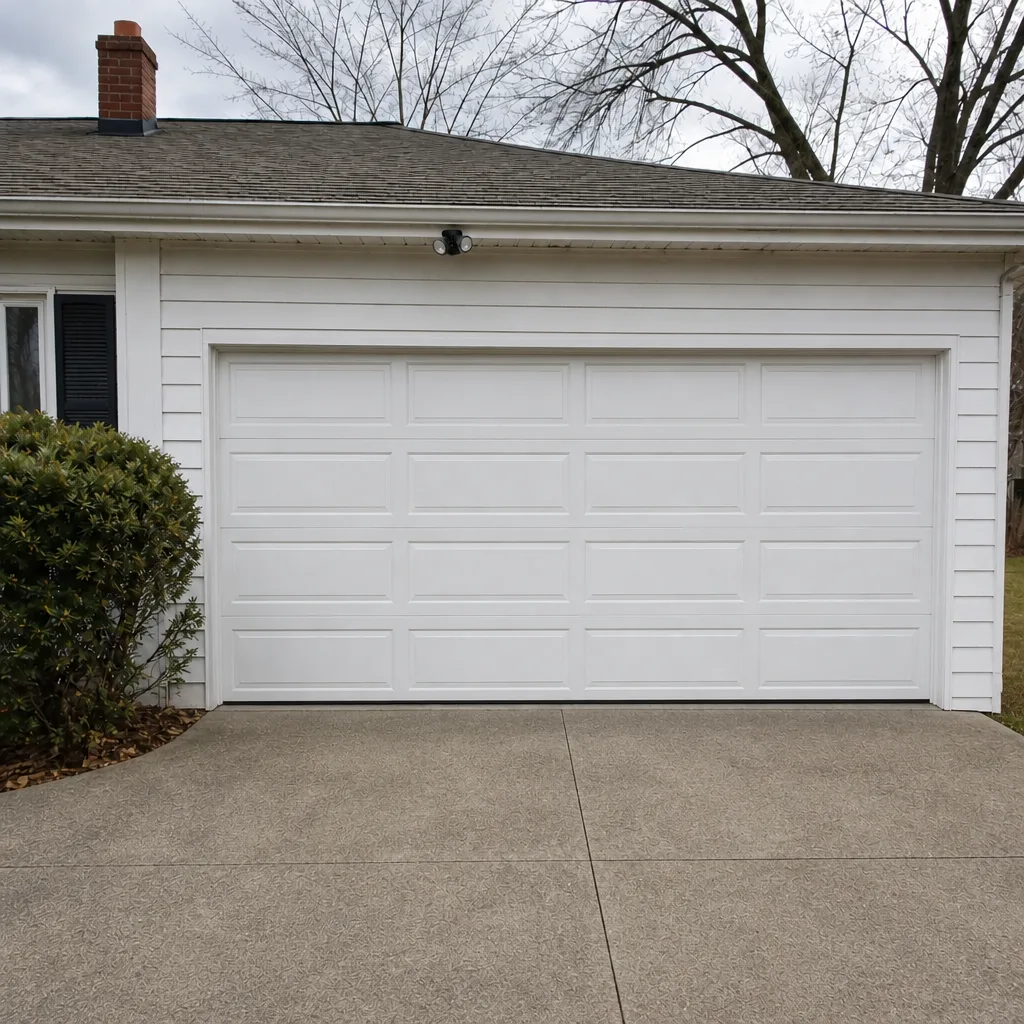 After
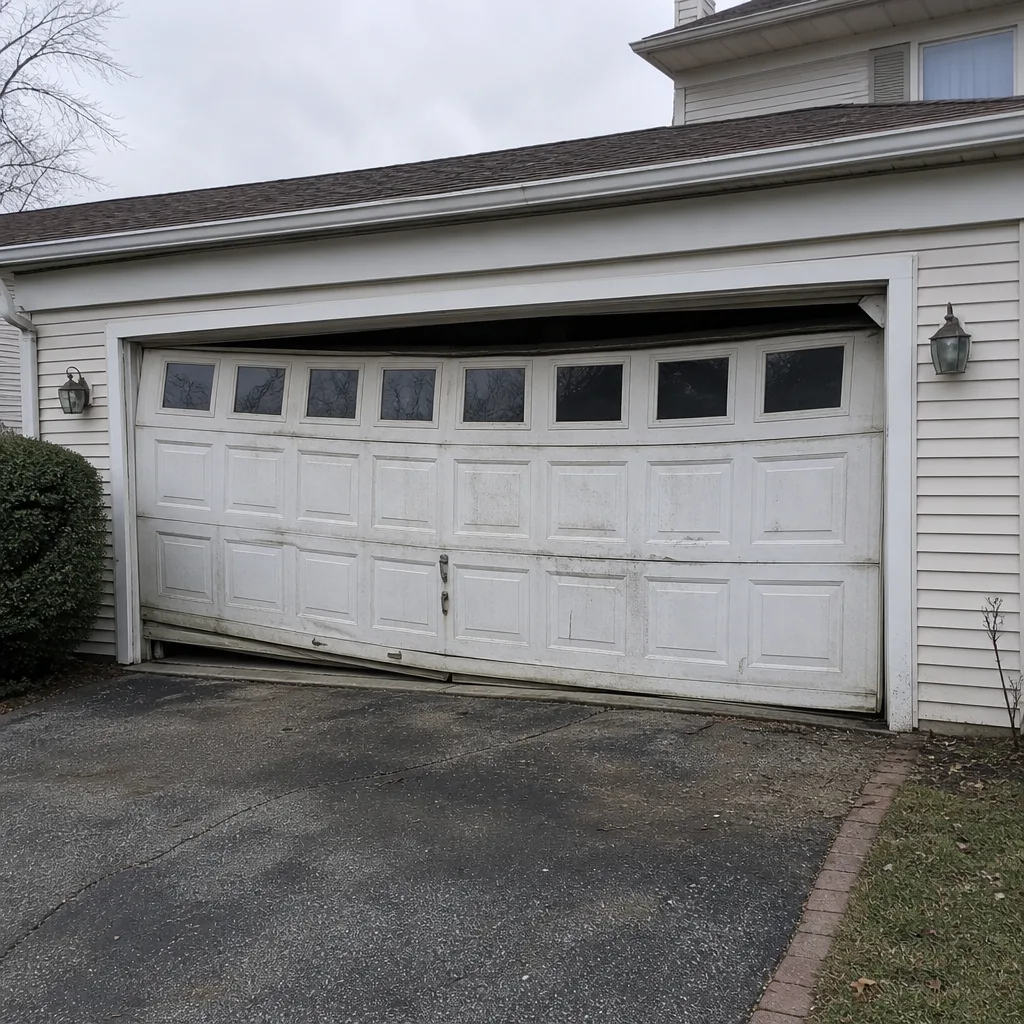 Before
 After
 Before
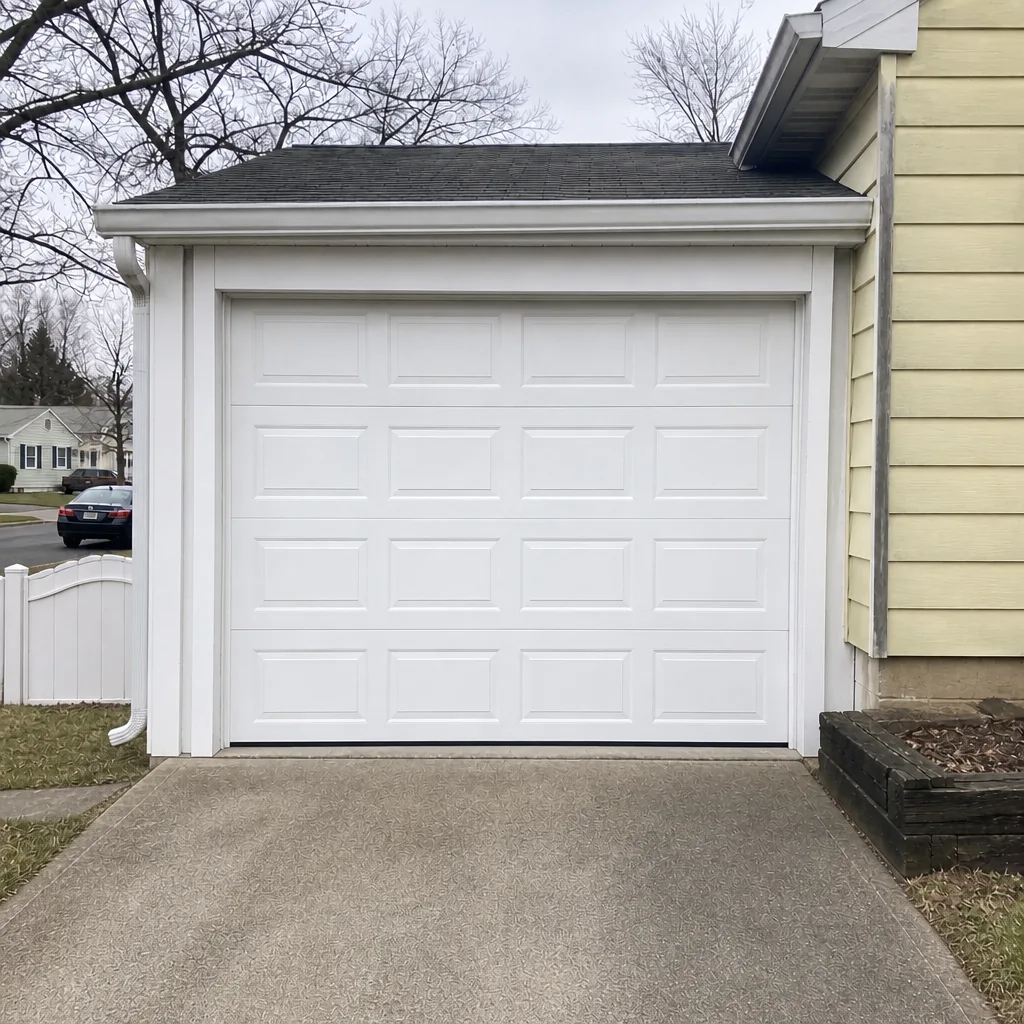 After
When to Call a Professional
Call a technician the moment you see a broken spring, a slack or off-drum cable, a door off its track, or a door that drops unexpectedly. Those are the dangerous categories, and no amount of home troubleshooting makes them safe to handle. Call if the opener hums with no movement, if the door reverses repeatedly for no obvious reason, or if the door has become noticeably harder to lift by hand. Call if you’ve been through the decision tree and are still unsure; diagnosing correctly on your own is what saves money, and guessing isn’t. Edison Garage Door Service offers free estimates in Edison. Call (877) 471-0219. We answer 24/7. Fast dispatch from 7am to 7pm, Sunday through Friday.
Frequently Asked Questions
Look at the torsion spring on the header above the door (if you have one) and check for a visible gap in the coil. On doors with extension springs along the sides, look for a spring that’s stretched longer than its neighbor or a door that’s sitting crooked. If the door also feels heavy or won’t lift more than a few inches, the spring is the problem. Don’t test it by lifting further; call a technician. Call (877) 471-0219 for an exact quote – estimates are free.
Probably not. A humming opener with no door movement usually means the motor is running but the door is too heavy to lift (a spring problem) or the internal gear or carriage has failed. The test is to pull the manual release with the door fully closed and lift the door by hand. If it’s heavy, the door is the problem. Call (877) 471-0219 and we’ll diagnose it precisely.
Cold makes metal more brittle and stiffens the grease in the opener. A spring that’s near the end of its cycle count often fails on the first hard freeze of the year in Edison, and an opener that’s working hard in July runs noticeably harder in January. If the door complains mainly in cold weather, that’s usually the spring telling you it’s due. Call (877) 471-0219 for a diagnostic visit – estimates are free.
Yes. We’re licensed and insured, and the technicians who work on your door are trained on the eight brand lines we service. Every price is quoted and agreed before any work starts, so you’ll know the cost before anyone touches the door. Call (877) 471-0219 to schedule an estimate – it’s free.
In most cases, yes. Same-day service is available for repair calls in Edison, and our phones are answered around the clock. Dispatch runs from 7am to 7pm, Sunday through Friday, and we’re closed Saturday. A call outside those hours gets booked into the next opening. Call (877) 471-0219. We answer 24/7. Fast dispatch from 7am to 7pm.
No. The price is quoted and agreed before any work starts, and the written estimate is the price. If we find something during the repair that changes the picture, we tell you before touching anything, and you decide whether to proceed. That’s why the diagnostic step matters: it’s what makes the estimate accurate. Call (877) 471-0219 for a free estimate – the number you agree to is the number you pay.
The Bottom Line
Garage door troubleshooting comes down to naming the category before you name the repair. Spring, track and cable, or opener. Watch how the door moves, listen to what it sounds like, and work the decision tree in this guide before you spend a dollar on parts. Anything involving torsion springs, slack cables, or a door off its track is hands-off and belongs with a technician. The rest you can safely narrow down yourself. In Edison, the seasonal swings put extra stress on the parts that carry the load, so a yearly check catches wear while it’s still a small fix. If you’re past step five of the tree or you’d rather not guess, we’re the call. Edison homeowners can reach us at (877) 471-0219. We answer 24/7, with fast dispatch from 7am to 7pm, Sunday through Friday, and free estimates on every visit. Door, opener, or full installation: one call handles all three, and we work on the brand already in your garage. Written by the team at Edison Garage Door Service.